Learning a new language is often associated with hours of memorization, grammar drills, and textbook exercises. However, if you’re looking to master Spanish phrases, there’s an alternative path that’s both effective and enjoyable: learning through games and fun activities. This approach not only boosts engagement, but also helps you remember phrases by anchoring them to memorable experiences. In this article, we’ll explore how to leverage playful methods for learning Spanish phrases, examine why this works from a psychological perspective, showcase innovative game ideas, and offer practical guidance for integrating these techniques into your daily life.
The Power of Play: Why Games Accelerate Spanish Phrase Learning
Why do games work so well for language acquisition? The answer lies in how our brains process information. According to a 2021 study from the Journal of Educational Psychology, learners who used game-based methods retained up to 20% more vocabulary and phrases than those using traditional study techniques. Games stimulate the brain’s reward system, making learning feel less like a chore and more like a captivating challenge.
Moreover, games often require rapid thinking, listening, and recall—skills crucial for conversational fluency. They provide instant feedback, allowing learners to correct mistakes and reinforce correct usage in real time. Research from the University of Granada in Spain found that students who played language games three times a week improved their spoken phrase fluency 1.5 times faster than those in lecture-based classes.
Incorporating play transforms passive learning into active engagement. This is particularly useful for phrases, which are often context-dependent and require situational practice. By using games, you can experience these phrases in action, making them easier to recall when you need them most.
Types of Games That Make Spanish Phrase Learning Fun
Not all games are created equal—some are tailored specifically for language learning, while others can be adapted from classic formats. Here’s an overview of popular game types and how they can be used to master Spanish phrases:
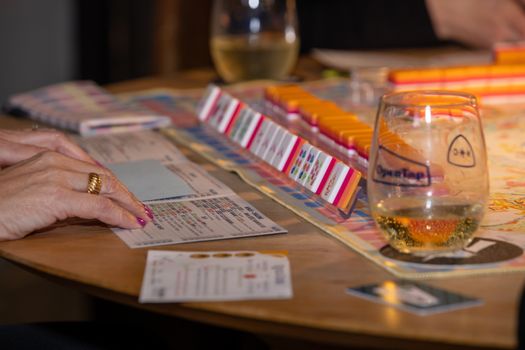
1. $1: Instead of numbers, fill out bingo cards with commonly used Spanish phrases. As the facilitator calls out English equivalents, players mark the matching Spanish phrase. This helps reinforce listening comprehension and phrase recognition. 2. $1: Games that simulate real-life situations (e.g., ordering food at a restaurant, asking for directions) immerse players in conversational contexts. Each move requires using a Spanish phrase, boosting practical fluency. 3. $1: Similar to memory or “Go Fish,” these games use cards with phrases in Spanish and their English translations. Players must match pairs, reinforcing translation and recall. 4. $1: Mobile apps and online games often feature phrase-based challenges, such as timed quizzes or fill-in-the-blank conversations. These are ideal for solo learners seeking instant feedback and repetition. 5. $1: Players act out a phrase in Spanish, and others guess its meaning. This adds a physical and visual component, helping to anchor phrases more securely in memory. 6. $1: Clues are given in Spanish phrases, and players must interpret them to find the next item or location. This combines movement, problem-solving, and language comprehension.According to a 2022 Duolingo Learner Survey, 68% of users said that incorporating games into their routine made them more likely to stick with language practice over the long term.
Comparing Game-Based Learning Methods for Spanish Phrases
With so many options, how do you know which game format is right for you? Here’s a comparative table to help you decide:
| Game Type | Best For | Group Size | Skill Focus | Engagement Level |
|---|---|---|---|---|
| Phrase Bingo | Beginner to Intermediate | 2+ | Listening, Recognition | High |
| Role-Playing Board Games | Intermediate to Advanced | 2-6 | Speaking, Contextual Use | Very High |
| Matching Card Games | Beginner | 2-4 | Translation, Recall | Moderate |
| Digital Phrase Quizzes | All Levels | 1 | Reading, Writing, Listening | High |
| Charades with Phrases | All Levels | 3+ | Comprehension, Speaking | Very High |
| Scavenger Hunts | Beginner to Intermediate | 2+ | Comprehension, Problem-Solving | High |
This table highlights that there’s a game format for every learning style and group size. Whether you’re studying solo or with friends, you can find a playful approach that fits your needs.
How to Design Your Own Spanish Phrase Games at Home
You don’t need to rely solely on commercial products or apps; designing your own games can be just as effective—and often more personal. Here are some steps and tips for creating games tailored to your learning goals:
1. $1: Begin by listing scenarios where you'd frequently use Spanish phrases, such as shopping, traveling, or meeting new people. 2. $1: Collect relevant phrases from textbooks, language websites, or phrasebooks. Aim for 15-30 phrases per game to keep it manageable. 3. $1: Pick a format that suits your group and objectives. For example, if you want to practice speaking, role-play or charades work well. For recognition, bingo or matching games are ideal. 4. $1: Write phrases on index cards, print bingo boards, or design scavenger hunt clues using Spanish phrases. Tools like Canva or Google Docs can help you create polished, printable materials. 5. $1: Define how points are earned, how turns are taken, and what constitutes a win. Small rewards (like a treat or a break) can boost motivation. 6. $1: Run through the game once to see if it flows smoothly. Adjust difficulty or timing as needed.For instance, you could create a “Spanish Phrase Restaurant” at home: one person acts as the waiter, and others must order using specific phrases. Not only does this practice set phrases, but it also injects fun and creativity into the learning process.
Integrating Spanish Phrase Games into Daily Life
The beauty of game-based learning is its flexibility. Here’s how you can weave these activities into your everyday routine for maximum impact:
- $1: Start your day with a five-minute digital phrase quiz while sipping your coffee. - $1: Swap out traditional board games for a round of Spanish phrase bingo or charades. - $1: Use mobile apps with phrase games during your daily commute (as a passenger, of course). - $1: Challenge friends or colleagues to a scavenger hunt or role-playing game during get-togethers. - $1: Use meal times to role-play restaurant scenarios or ask for items using Spanish phrases.According to a 2023 survey by Language Magazine, learners who incorporated language games into their daily lives practiced 30% more frequently than those who relied on textbooks alone.
Consistency is key: even short, daily bursts of playful learning can yield substantial results over time. Make a habit of it, and you’ll find yourself reaching for Spanish phrases naturally and confidently in real situations.
Beyond the Basics: Advanced Strategies for Phrase Mastery
Once you’ve grown comfortable with common expressions, it’s time to ramp up the challenge. Here are some advanced strategies to keep your learning dynamic and effective:
- $1: Focus each game session on a particular theme (e.g., travel, emergencies, business) to deepen your vocabulary in specialized areas. - $1: Record yourself or your friends acting out conversations and play them back for self-evaluation and improvement. - $1: Take familiar phrases and modify them to fit new situations, fostering flexibility and creativity in your language use. - $1: Incorporate idiomatic expressions and regional slang into your games to sound more like a native speaker. - $1: Organize tournaments with a leaderboard to motivate consistent participation among friends or classmates.These strategies ensure that your learning remains fresh, progressive, and tailored to real-world use.
Making Spanish Phrase Learning Enjoyable and Sustainable
Mastering Spanish phrases doesn’t have to be a struggle. By transforming rote memorization into engaging play, you not only accelerate your learning but also make it sustainable. The combination of cognitive science and creativity behind game-based learning ensures that phrases stick, motivation stays high, and progress remains steady.
Numerous studies and learner testimonials confirm that fun, interactive practice outpaces traditional methods in both retention and enthusiasm. Whether you’re designing your own games, using digital platforms, or turning daily routines into playful practice sessions, the key is to keep things varied and enjoyable.
So, gather your friends, set up your favorite game, and start speaking Spanish with confidence—one phrase at a time.